AI Venue Finder
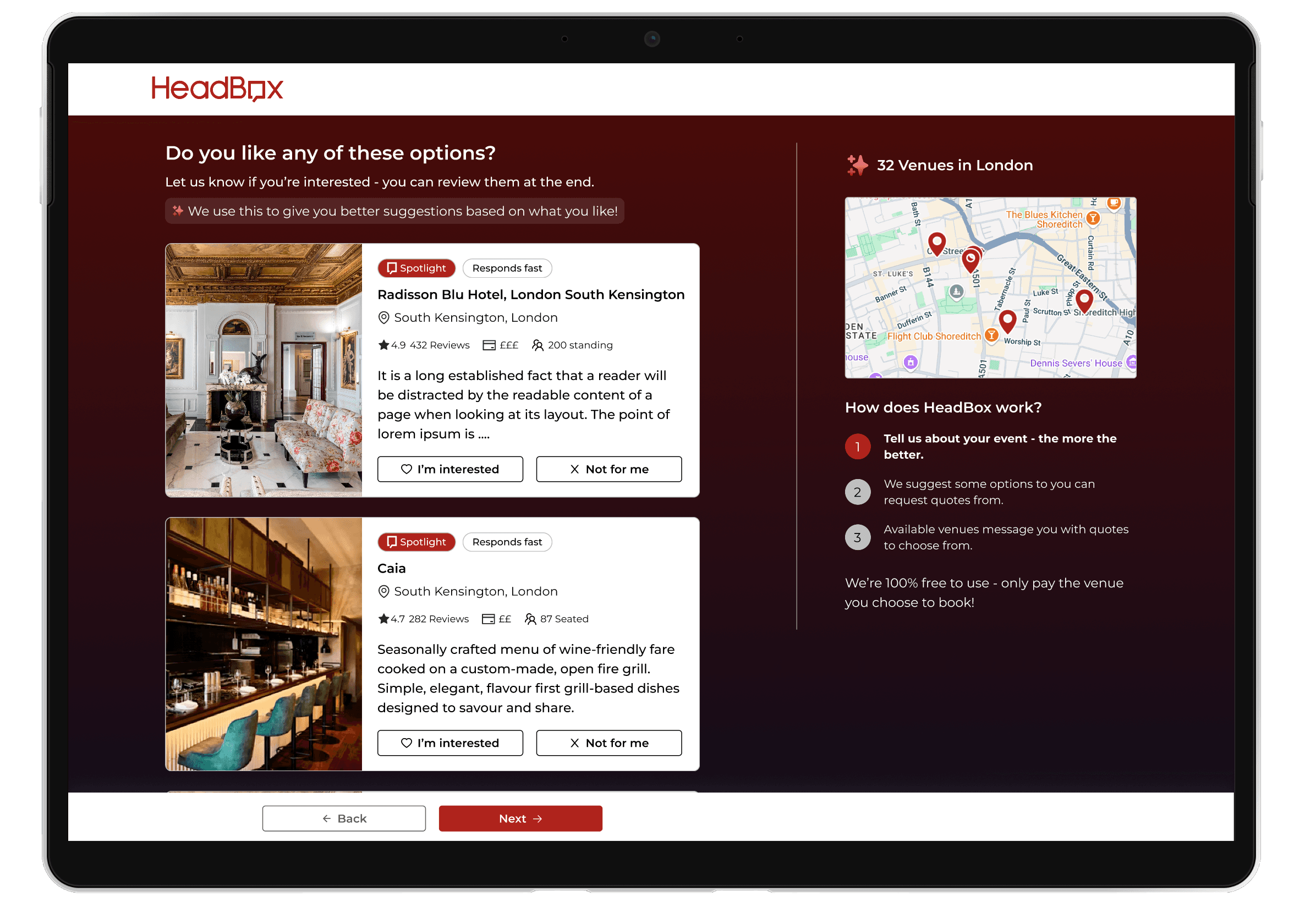
I redesigned the discovery and matching experience between guests and venues to increase lead quality, reduce host churn, and improve marketplace efficiency. Replacing a high-effort, low-ROI model with an intent-driven matching flow, powered by AI.
AI Venue Finder
AI Venue Finder
I redesigned the discovery and matching experience between guests and venues to increase lead quality, reduce host churn, and improve marketplace efficiency. Replacing a high-effort, low-ROI model with an intent-driven matching flow, powered by AI.
Business problem
HeadBox's Lead Feed was a high-churn product ( 60% YoY )
Host users needed 27 messages to get 1 match.
Even after matching, only 0.7–2.3% converted to bookings.
Guest users received irrelevant messages → poor first impression → trust drop.
Sales had to replace majority of the host user base every year just to break even.
The model wasn’t scalable, hurting revenue, brand perception, and product market fit.
HeadBox's Lead Feed was a high-churn product (60% YoY)
Host users needed 27 messages to get 1 match.
Even after matching, only 0.7–2.3% converted to bookings.
Guest users received irrelevant messages → poor first impression → trust drop.
Sales had to replace majority of the host user base every year just to break even.
The model wasn’t scalable, hurting revenue, perception, and product market fit.
Hypothesis:
If guests proactively enquire with relevant venues upfront, hosts will receive qualified leads, resulting in higher conversion, reduced spam, and improved renewal rates.
Project Goal:
Increase match quality and host ROI by shifting the matching effort to where the intent originates — the guest.
Project Overview:
Project Overview:
Who was involved?
Delivery team: Product Designer, 3 full-stack engineers
Stakeholders: CTO, CEO, Head of Marketing, Managing Director M&E team, Head of Venue Relations.
My Role
Sole product designer responsible for end-to-end design and engineer handover
Set the strategy to shift Lead Feed to an intent-based matching model based on a research study I conducted
Aligned cross-functional teams on the new guest-led enquiry approach.
Designed the core Venue Finder flow and helped define outcome metrics.
Tools used
Figma - Wireframing and prototyping
FigJam - Ideation workshops
Hotjar - Heatmaps, sessions and testing
Mode - Data Dashboard
Notion & JIRA - Project management and engineer handoff notes
Granola & ChatGPT - UX Research assistance
Project Goal:
Increase match quality and host ROI by shifting the matching effort to where the intent originates — the guest.
Hypothesis:
If guests proactively enquire with relevant venues upfront, hosts will receive qualified leads, resulting in higher conversion, reduced spam, and improved renewal rates.
Business Outcome
+30% increase in booking value via LF
Redirected all £50k+ events into the commissionable AM route, strengthening revenue capture.
Improved data grouping + trend insights: enabling smarter venue-sourcing recommendations for M&E (our highest-revenue team).
Early validation: retained 4 at-risk clients by demoing Venue Finder prototypes and early test results.
User benefits
Host users:
Higher-quality leads from guests who enquire that are already interested.
Less wasted effort
Lower spam + noise
Better conversion potential - Improved ROI
Guest users:
Faster booking, interactive experience and instant options
More relevant venues reaching out
Higher confidence in the platform being able to meet their needs
Lower cognitive load and direct path to booking.
Project iterations
Iteration 1 (A/B test):
Identified that users wanted the option to bypass the AI prompt, and that we needed stronger gating to prevent scraper activity.
Iteration 2 (A/B test):
Simplified the flow and removed friction from v1, resulting in lower drop-off while maintaining higher-quality leads.
Next Opportunities:
Further optimising sequencing and tailor flows by booking intent and booker type (corporate vs private).
High level venue finder journey and notes
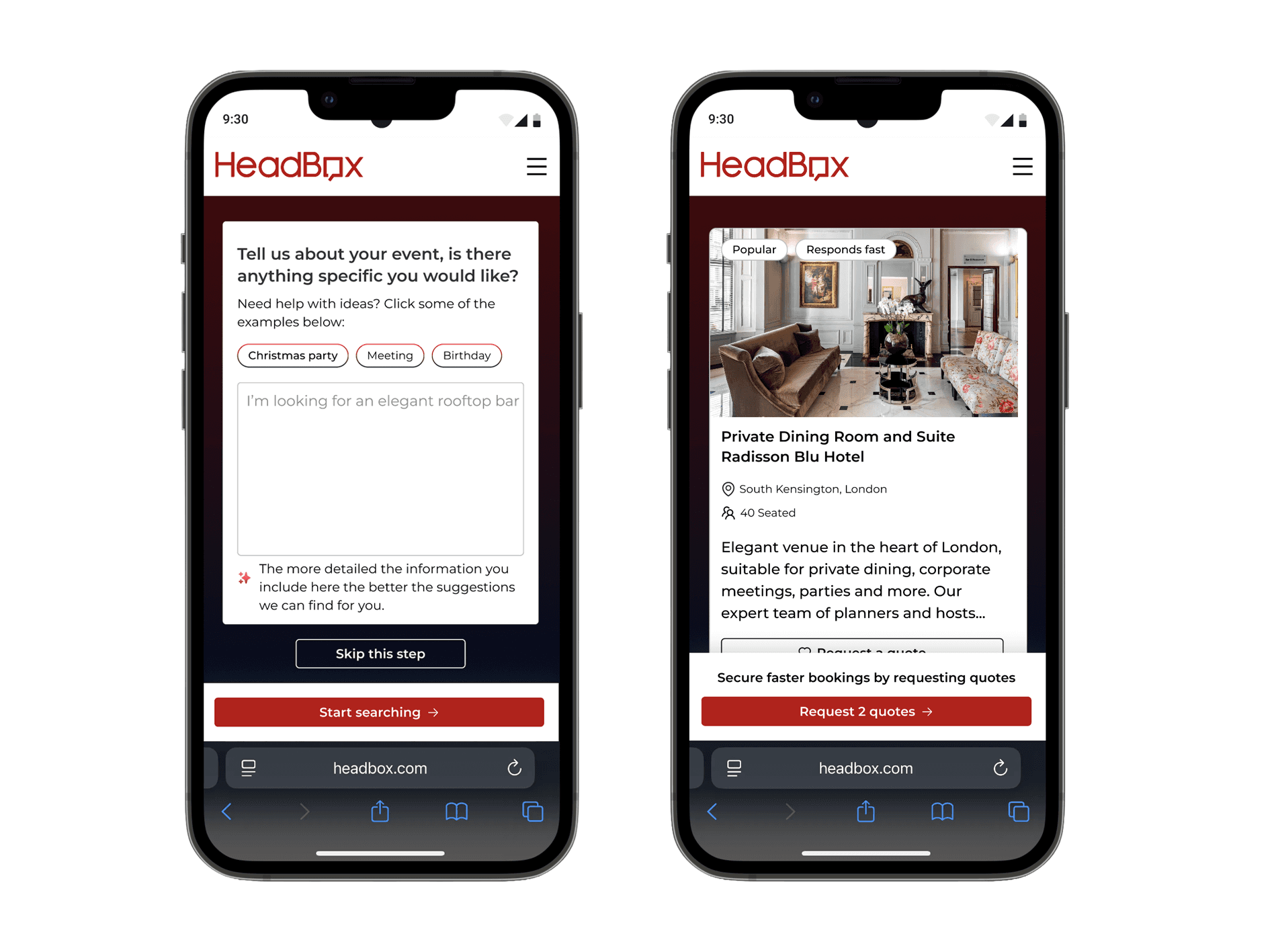
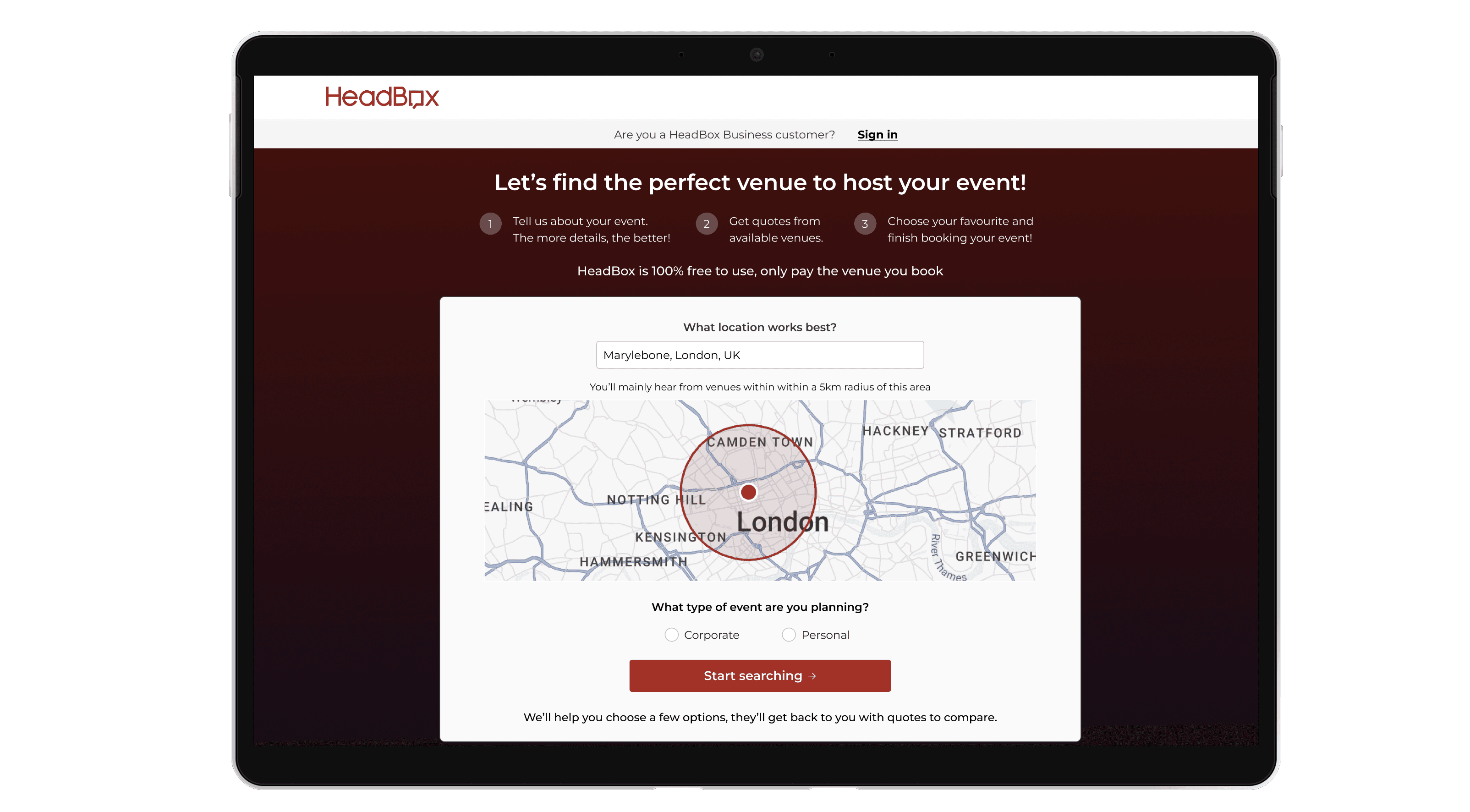
We used Venue Finder as an engagement layer that funnels users into our higher-performing products while generating intent signals
for internal teams. The experience was designed around the Hook Model (Trigger → Action → Reward → Investment),
making the matching process more interactive and habit-forming.
We used Venue Finder as an engagement layer that funnels users into our higher-performing products while generating intent signals
for internal teams. The experience was designed around the Hook Model (Trigger → Action → Reward → Investment),
making the matching process more interactive and habit-forming.
High level venue finder journey and notes
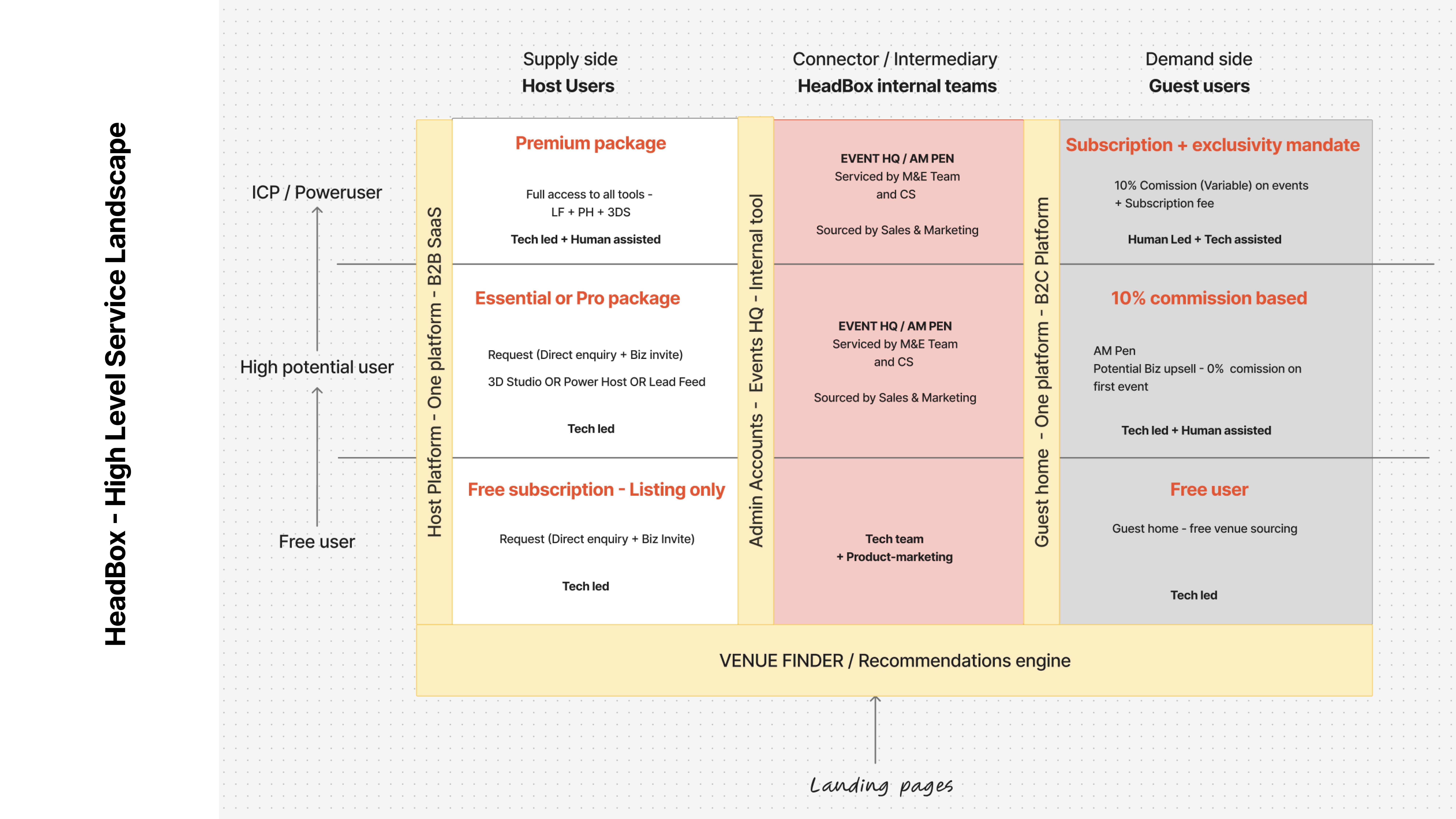
We used Venue Finder as an engagement layer that funnels users into our higher-performing products while generating intent signals for internal teams.
The experience was designed around the Hook Model (Trigger → Action → Reward → Investment), making the matching process more interactive and habit-forming.
V1 - First release - A/B Test learnings
Drop-off at the AI prompt step highlighted a key friction point.
20% of users tried to bypass the AI flow, signalling a need for clearer opt-out options.
Increased scraping activity led us to tighten gating on recommendations.
Higher-value leads increased, with more being routed to internal teams and successfully closed.
Paying hosts saw a 30% uplift in inbound enquiries compared to the control.
Data, heatmaps, and Hotjar recordings directly guided the refinements implemented in V2.
Higher host engagement and discoverability driven by higher-intent enquiries.
12% reduction in initial drop-off from a simplified landing page.
Higher completion rates after moving the prompt to step two and making it skippable.
30% increase in direct enquiries, with fewer low-value submissions.
Improved routing of £50k+ events into commissionable AM workflows.
4 at-risk clients retained after sharing V2 flow results.
22% fewer brief completions, offset by higher-quality submissions routed to the correct flow.
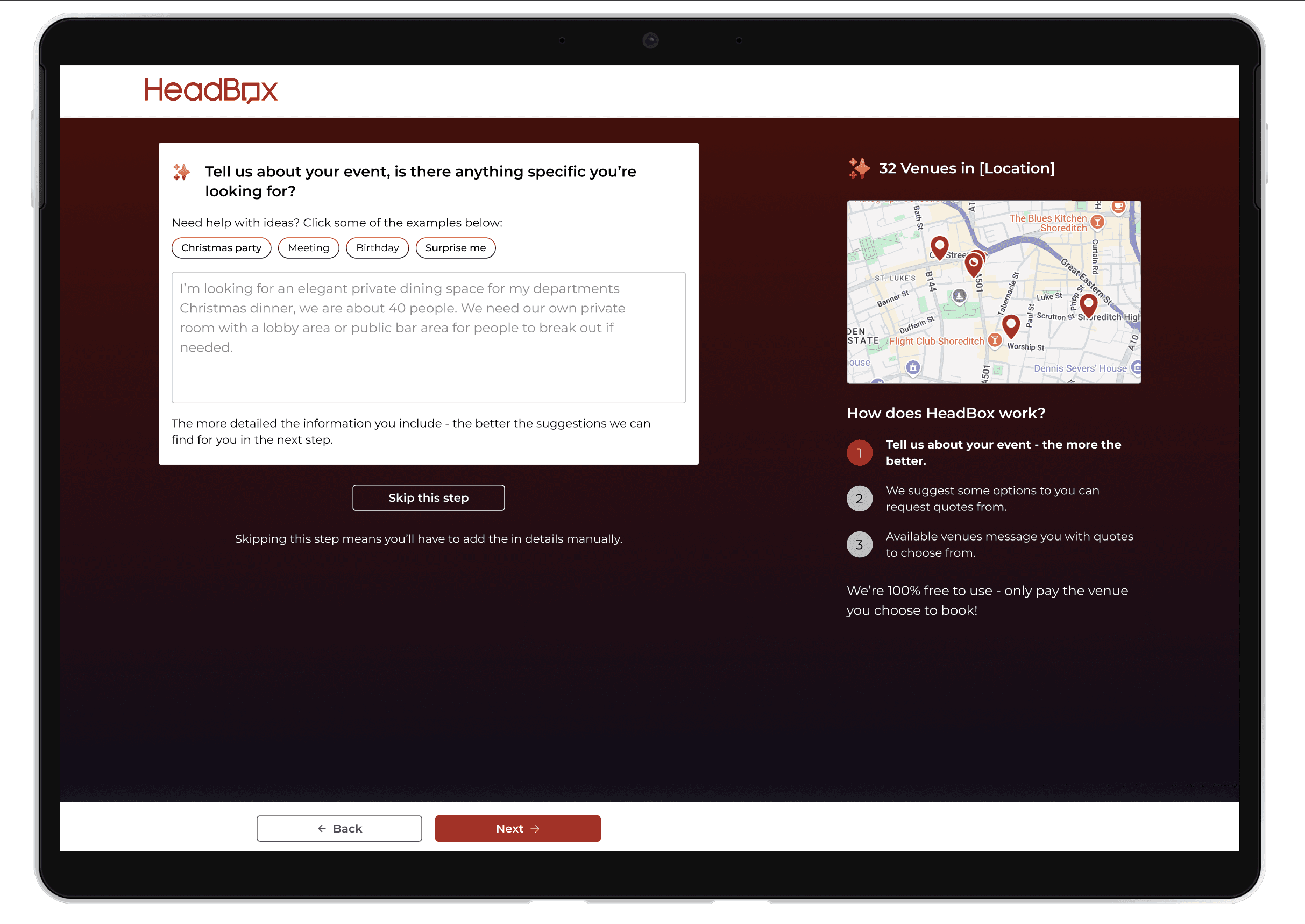
V2 - Second release - A/B Test findings
Drop-off at the AI prompt step highlighted a key friction point.
20% of users tried to bypass the AI flow, signalling a need for clearer opt-out options.
Increased scraping activity led us to tighten gating on recommendations.
Higher-value leads increased, with more being routed to internal teams and successfully closed.
Paying hosts saw a 30% uplift in inbound enquiries compared to the control.
Data, heatmaps, and Hotjar recordings directly guided the refinements implemented in V2.
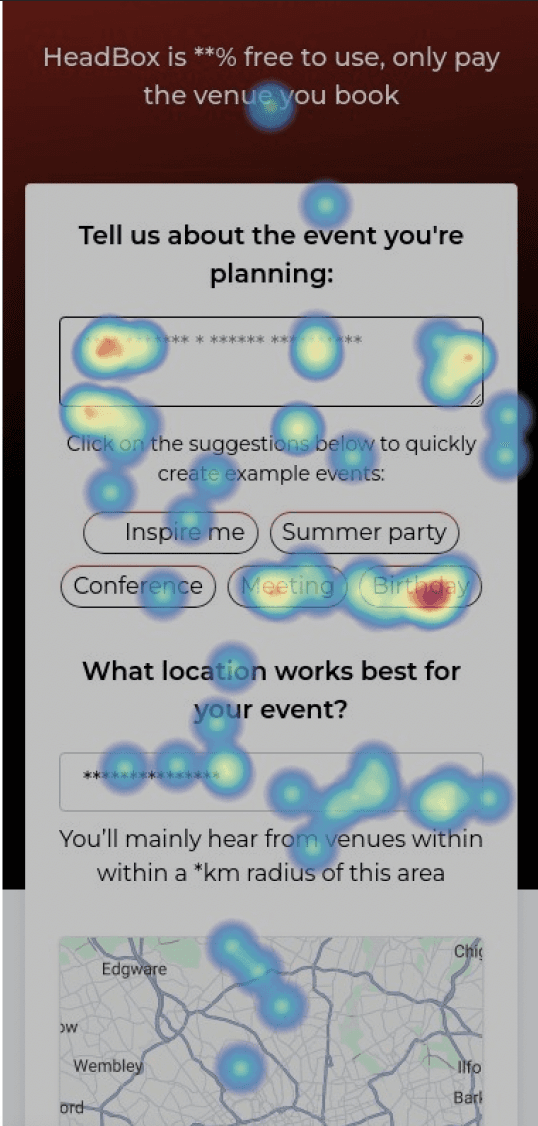
Drop-off at the AI prompt step highlighted a key friction point.
20% of users tried to bypass the AI flow, signalling a need for clearer opt-out options.
Increased scraping activity led us to tighten gating on recommendations.
Higher-value leads increased, with more being routed to internal teams and successfully closed.
Paying hosts saw a 30% uplift in inbound enquiries compared to the control.
Data, heatmaps, and Hotjar recordings directly guided the refinements implemented in V2.
Higher host engagement and discoverability driven by higher-intent enquiries.
12% reduction in initial drop-off from a simplified landing page.
Higher completion rates after moving the prompt to step two and making it skippable.
30% increase in direct enquiries, with fewer low-value submissions.
Improved routing of £50k+ events into commissionable AM workflows.
4 at-risk clients retained after sharing V2 flow results.
22% fewer brief completions, offset by higher-quality submissions routed to the correct flow.
High level venue finder journey and notes
We used Venue Finder as an engagement layer that funnels users into our higher-performing products while generating intent signals for internal teams.
The experience was designed around the Hook Model (Trigger → Action → Reward → Investment), making the matching process more interactive and habit-forming.
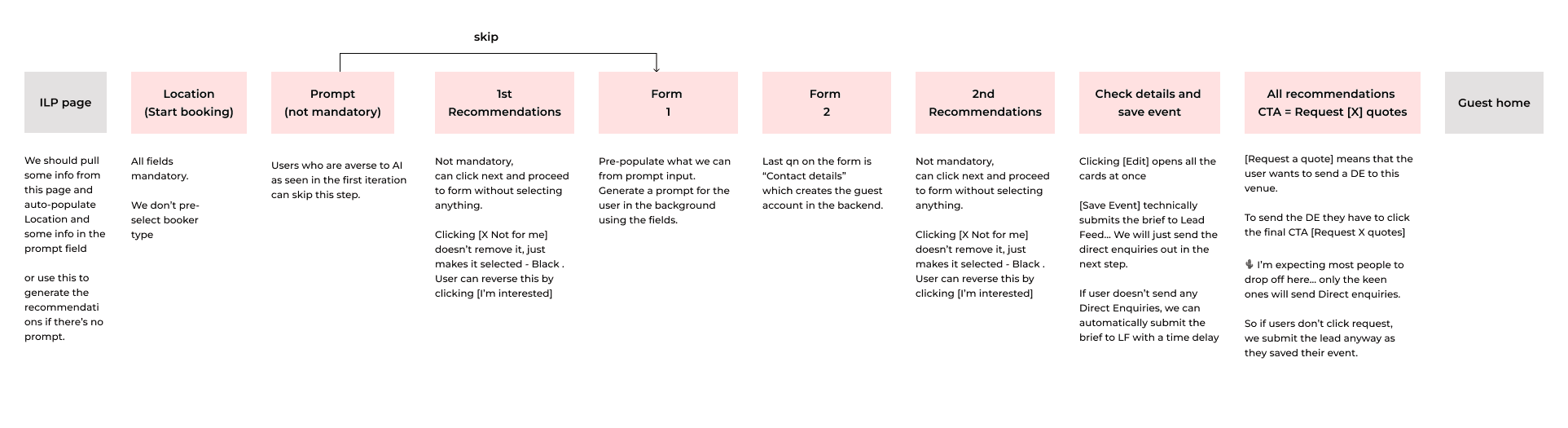
We used Venue Finder as an engagement layer that funnels users into our higher-performing products while generating intent signals for internal teams.
The experience was designed around the Hook Model (Trigger → Action → Reward → Investment), making the matching process more interactive and habit-forming.
High level venue finder journey and notes
V1 - First release - A/B Test learnings
V2 - Second release - A/B Test findings
Higher host engagement and discoverability driven by higher-intent enquiries.
12% reduction in initial drop-off from a simplified landing page.
Higher completion rates after moving the prompt to step two and making it skippable.
30% increase in direct enquiries, with fewer low-value submissions.
Improved routing of £50k+ events into commissionable AM workflows.
4 at-risk clients retained after sharing V2 flow results.
22% fewer brief completions, offset by higher-quality submissions routed to the correct flow.
Drop-off at the AI prompt step highlighted a key friction point.
20% of users tried to bypass the AI flow, signalling a need for clearer opt-out options.
Increased scraping activity led us to tighten gating on recommendations.
Higher-value leads increased, with more being routed to internal teams and successfully closed.
Paying hosts saw a 30% uplift in inbound enquiries compared to the control.
Data, heatmaps, and Hotjar recordings directly guided the refinements implemented in V2.
V1 - First release - A/B Test learnings
Drop-off at the AI prompt step highlighted a key friction point.
20% of users tried to bypass the AI flow, signalling a need for clearer opt-out options.
Increased scraping activity led us to tighten gating on recommendations.
Higher-value leads increased, with more being routed to internal teams and successfully closed.
Paying hosts saw a 30% uplift in inbound enquiries compared to the control.
Data, heatmaps, and Hotjar recordings directly guided the refinements implemented in V2.
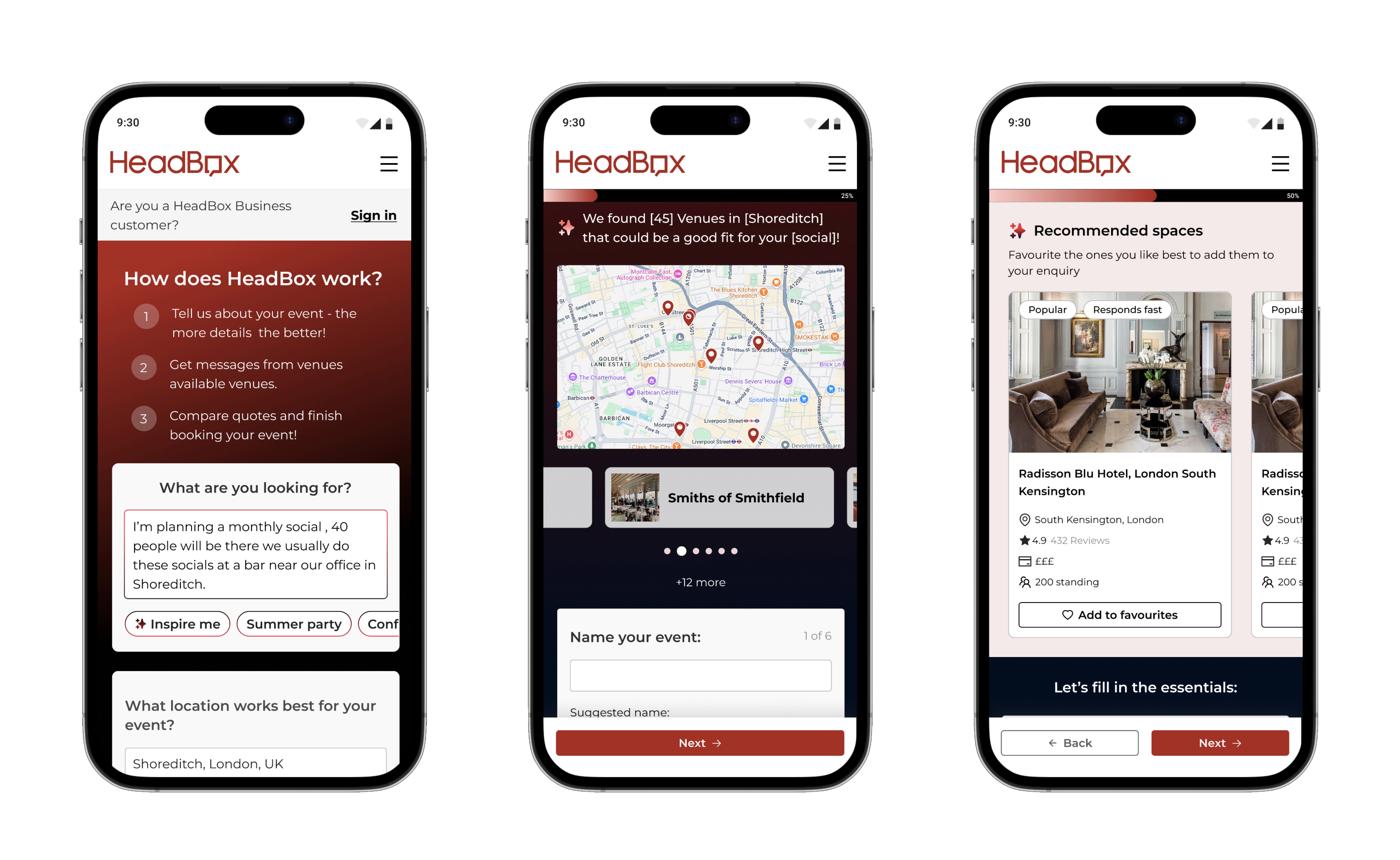
Improved host engagement and discoverability driven by higher-intent enquiries.
Simpler landing page, got more people into the flow reducing initial drop off by 12% ,
Moving the prompt to the second step and making it skippable increased completion rates.
30% increase in direct enquiries, with fewer low-value submissions.
Stronger routing of £50k+ events into commissionable AM workflows.
Retention of 4 at-risk clients after sharing V2 flow updates and test data.
Reduced number of people completing the brief by 22% However, the quality of completed briefs were higher as more people were routed to the right flow.
Improved host engagement and discoverability driven by higher-intent enquiries.
Simpler landing page, got more people into the flow reducing initial drop off by 12% ,
Moving the prompt to the second step and making it skippable increased completion rates.
30% increase in direct enquiries, with fewer low-value submissions.
Stronger routing of £50k+ events into commissionable AM workflows.
Retention of 4 at-risk clients after sharing V2 flow updates and test data.
Reduced number of people completing the brief by 22% However, the quality of completed briefs were higher as more people were routed to the right flow.
Improved host engagement and discoverability driven by higher-intent enquiries.
Simpler landing page, got more people into the flow reducing initial drop off by 12% ,
Moving the prompt to the second step and making it skippable increased completion rates.
30% increase in direct enquiries, with fewer low-value submissions.
Stronger routing of £50k+ events into commissionable AM workflows.
Retention of 4 at-risk clients after sharing V2 flow updates and test data.
Reduced number of people completing the brief by 22% However, the quality of completed briefs were higher as more people were routed to the right flow.
Improved host engagement and discoverability driven by higher-intent enquiries.
Simpler landing page, got more people into the flow reducing initial drop off by 12% ,
Moving the prompt to the second step and making it skippable increased completion rates.
30% increase in direct enquiries, with fewer low-value submissions.
Stronger routing of £50k+ events into commissionable AM workflows.
Retention of 4 at-risk clients after sharing V2 flow updates and test data.
Reduced number of people completing the brief by 22% However, the quality of completed briefs were higher as more people were routed to the right flow.
V1 - First release - A/B Test findings
V2 - Second release - A/B Test findings
V2 - Second release - A/B Test findings
Challenges
Balancing lead quality with host visibility - improving guest relevance without reducing perceived value for paying hosts.
Protecting the platform from scrapers while keeping the flow low-friction for genuine users.
Aligning multiple revenue teams (Sales, M&E, AM) around a new intent-led model with different incentives and workflows.
Delivering the project with high velocity and low resources.
Connected workflows
M&E Teams HeadBox business experience. Using the venue finder as a lead generation source for these high value business bookers.
Recommendation engine for internal teams to use when planning complex events
New top of the funnel landing page project coming in 2026 which will further shorten the routes to booking and use venue finder learnings to create a quick booking experience.
Favouriting venues and adding them to a "Shortlist"
Future iterations
Further shortening the journey once we have identified the minimum useful data points
Offering an on site payment and booking method
Offering on site calendar to schedule bookings
Improved guest user dashboard which allows them to add multiple bookings to the same event.
Smarter recommendation engine as we learn more from user behaviour.
Want to learn more about this project?
Get in touch: ashni.dave111@gmail.com
OTHER PROJECTS

Higher host engagement and discoverability driven by higher-intent enquiries.
12% reduction in initial drop-off from a simplified landing page.
Higher completion rates after moving the prompt to step two and making it skippable.
30% increase in direct enquiries, with fewer low-value submissions.
Improved routing of £50k+ events into commissionable AM workflows.
4 at-risk clients retained after sharing V2 flow results.
22% fewer brief completions, offset by higher-quality submissions routed to the correct flow.
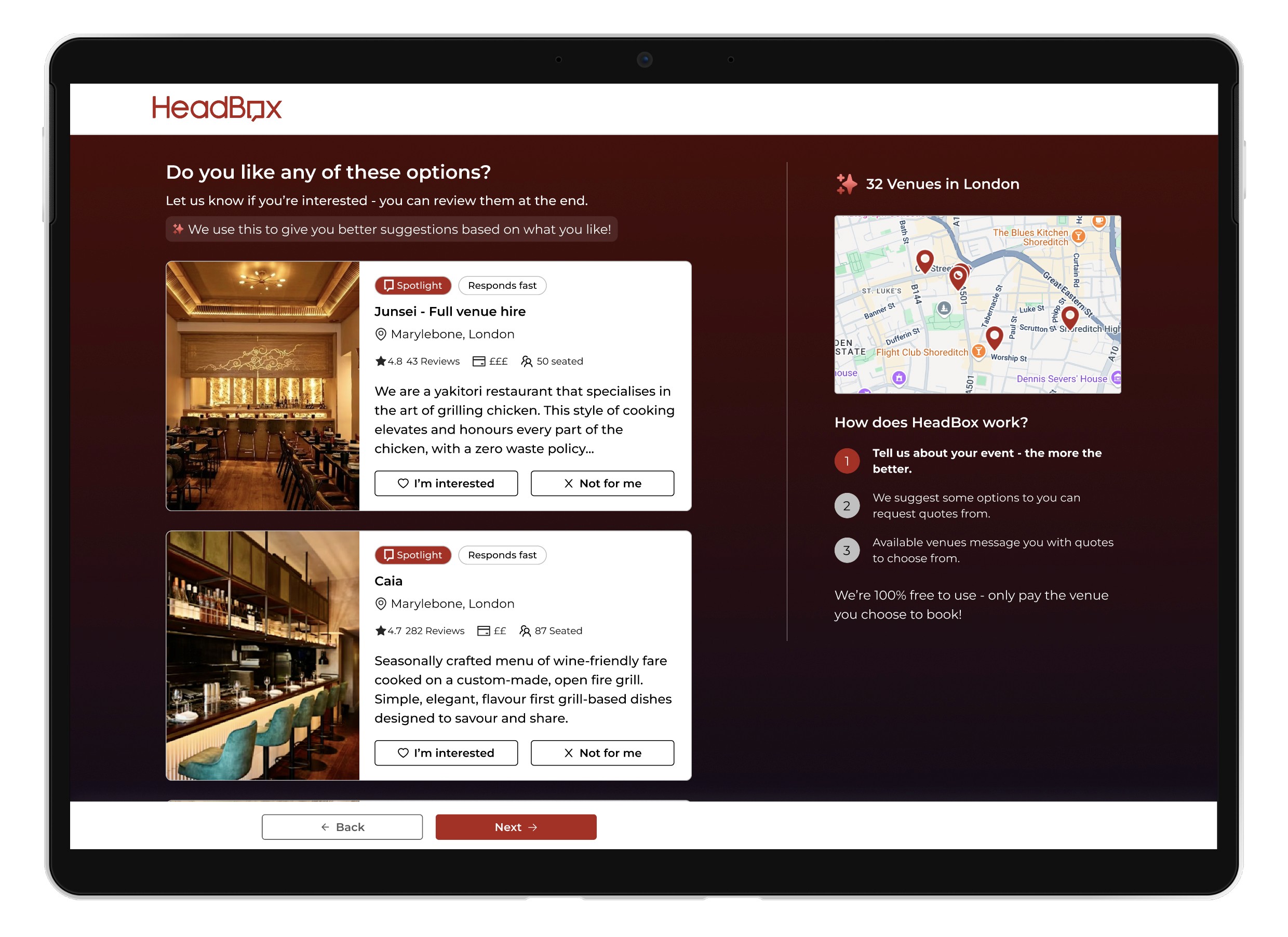
Venue Finder repositioned a failing marketplace into an intent-led discovery engine. This helped with improving trust, lead quality, and ultimately, revenue sustainability.
Venue Finder repositioned a failing marketplace into an intent-led discovery engine. This helped with improving trust, lead quality, and ultimately, revenue sustainability.
Challenges
Balancing lead quality with host visibility - improving guest relevance without reducing perceived value for paying hosts.
Protecting the platform from scrapers while keeping the flow low-friction for genuine users.
Aligning multiple revenue teams (Sales, M&E, AM) around a new intent-led model with different incentives and workflows.
Delivering the project with high velocity and low resources.
Connected workflows
M&E Teams HeadBox business experience. Using the venue finder as a lead generation source for these high value business bookers.
Recommendation engine for internal teams to use when planning complex events
New top of the funnel landing page project coming in 2026 which will further shorten the routes to booking and use venue finder learnings to create a quick booking experience.
Favouriting venues and adding them to a "Shortlist"
Future iterations
Further shortening the journey once we have identified the minimum useful data points
Offering an on site payment and booking method
Offering on site calendar to schedule bookings
Improved guest user dashboard which allows them to add multiple bookings to the same event.
Smarter recommendation engine as we learn more from user behaviour.
Want to learn more about this project?
Get in touch: ashni.dave111@gmail.com
OTHER PROJECTS
OTHER PROJECTS
Project Goal:
Increase match quality and host ROI by shifting the matching effort to where the intent originates — the guest.
Hypothesis:
If guests proactively enquire with relevant venues upfront, hosts will receive qualified leads, resulting in higher conversion, reduced spam, and improved renewal rates.
Project Goal:
Increase match quality and host ROI by shifting the matching effort to where the intent originates — the guest.
Hypothesis:
If guests proactively enquire with relevant venues upfront, hosts will receive qualified leads, resulting in higher conversion, reduced spam, and improved renewal rates.
Business problem
HeadBox's Lead Feed was a high-churn product ( 60% YoY )
Host users needed 27 messages to get 1 match.
Even after matching, only 0.7–2.3% converted to bookings.
Guest users received irrelevant messages → poor first impression → trust drop.
Sales had to replace majority of the host user base every year just to break even.
The model wasn’t scalable, hurting revenue, brand perception, and product market fit.